On our second day the early risers in the group saw quite a few birds around the hotel and I did manage my first ever definite photo of a white wagtail while waiting for off.
 |
| White Wagtail |
Generally though I couldn't see much of what the others saw in the way of birds during the whole trip and took a mental note to get an overdue eye test once back home again.
Eventually we set out to look for fresh meadows near the village of Hrastovalje, not far from the farm where the previous night's impromptu birdwatching session took place.
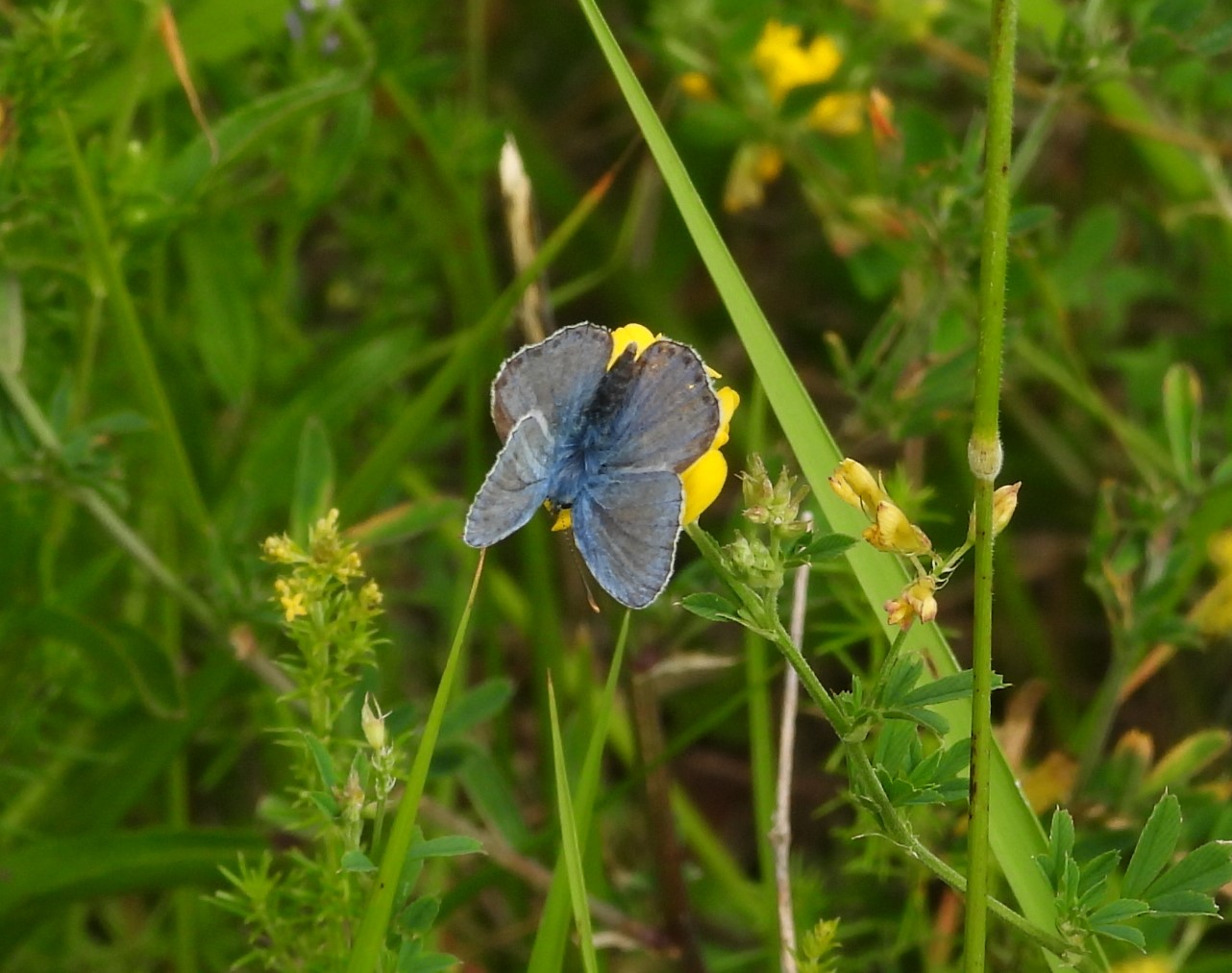
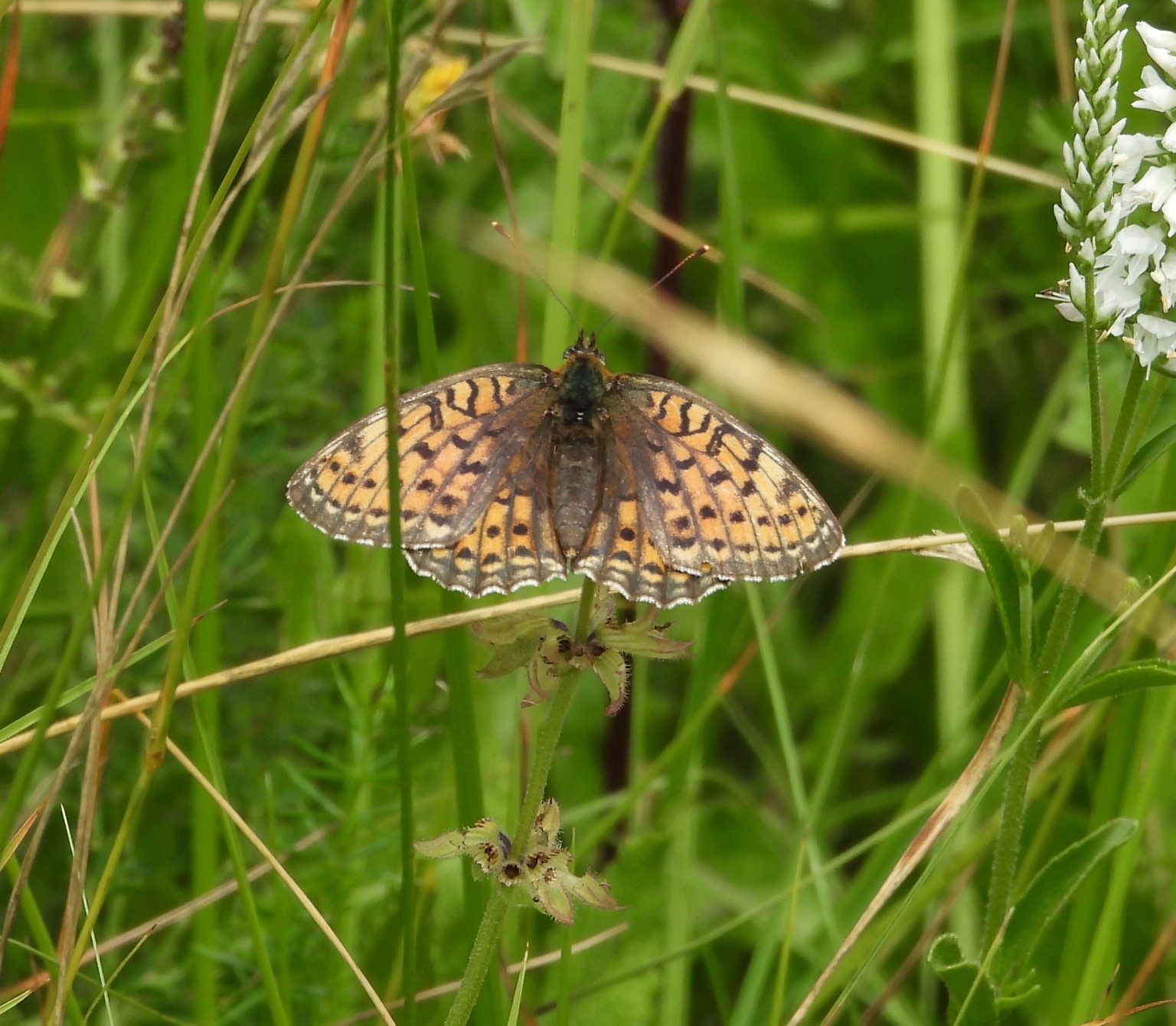
Obviously the main target was butterflies and on and after an upland walk, we found plenty to look at including clouded yellow, plenty of scarce swallowtail, holly blue, more skippers, wall brown, mallow skipper and grizzled skipper. Particularly pleasing for me was my first encounters with Reverdin's Blue and Eastern Short-tailed Blue:
Several grizzled skippers were seen near a puddle in the path we used, where there also there were a large number of wood whites puddling. The interesting thing here is that their black spots have shown up far larger than they appear to the naked eye:
Wood Whites puddling
I had mixed feelings when we came across the first small blue I've ever spotted but arrived on the scene late and only got very blurred and useless shots of it...
However the most spectacular photo opportunity, possibly of the whole trip, was presented by the newly-hatched European Swallowtail that flattered around the van when we got ready to move on and hung about for ages as if posing for the cameras.
 |
| European Swallowtail |
While moving on to the afternoon venue, we saw a couple of white storks from the bus that even I couldn't fail to see.
 |
| White Stork |
The next venue proved to be a disappointment. The meadows looked promising and one or two butterflies briefly appeared but after twenty minutes the clouds moved in and, although it never properly rained and stayed warm, butterflies were scarcely to be seen at all.
I think the only one a I noted was a marbled white that remained stoically attached to the same bit of knapweed for ages with wings closed:
 |
| Marbled White |
When in such circumstances others turn to birds I turn these days to insects but would be hard put to name any of the ones I saw apart from the nine-spot and red wave moths.
Various Bugs
I feel I should be able to identify the bee, which I first thought was a nomad but, having considered colletes and yellow-faced bees, I don't have a clue.
Amongst other animals we came across during the day were a pool frog, a green lizard and a wall lizard.
 | | Pool Frog |
|  | | Green Lizard |
|  | | Wall Lizard |
|
After dinner we returned to the farm area to look for Scops Owls, which duly did not turn up, though we did see a kield skimmer (dragonfly), raven and dulbentan bat and, learning from past experiences, I decided video was the best media to catch the non-stop flight of the hummingbird hawk moth.
Humming Bird Hawk Moth
Altogether quite a productive day the talk at dinner was already about the relative shortage of butterflies compared to previous years due to poor weather throughout Europe..